

In fast-growing e-commerce markets across Southeast Asia, the Middle East, Latin America, and Southern Asia, Cash on Delivery (COD) remains a critical revenue driver. For millions of buyers lacking access to credit cards or hesitant to share digital credentials online, pay-on-delivery builds the trust required to place an order.
However, for e-commerce merchants, COD carries a severe hidden liability: Return to Origin (RTO) and bogus orders.
When a customer refuses a parcel at their doorstep or submits a fraudulent address, the merchant bears the complete financial brunt. You lose two-way shipping fees, waste customized packaging, risk inventory damage in transit, and burn your paid customer acquisition budget.
Eliminating COD entirely is rarely viable—doing so immediately slashes top-line checkout volume. The real solution lies in systematic risk mitigation.
Here are 5 proven strategies top-tier direct-to-consumer (DTC) brands employ to suppress bogus orders and slash COD return rates down to single digits.
1. Implement Micro-Deposits or Upfront Shipping Tokens
The primary psychological vulnerability of traditional COD is zero buyer commitment. Because clicking “Place Order” costs nothing upfront, impulse buyers feel no remorse changing their minds, ordering the same item from a competitor, or ignoring the courier when they arrive.
The Fix: Split Partial Payment
- Allow the customer to pay for the actual physical product via Cash on Delivery, but require a nominal upfront shipping deposit via digital wallet or card.
- When a customer makes even a minimal financial investment upfront, delivery acceptance rates skyrocket to above 95%.
- Alternatively, offer a subtle cash discount (e.g., 5% off) or free gift for choosing prepaid checkout over COD to naturally shift payment preferences.
2. Deploy Automated Fraud Scoring & IP Velocity Checks
In high-volume e-commerce, malicious bots, dishonest competitors, and chronic refund abusers often exploit open checkout forms by firing dozens of dummy orders with fictitious recipient names.
Manual review of each order is slow, expensive, and unscalable. Modern checkouts must deploy automated fraud detection at the moment of submission.
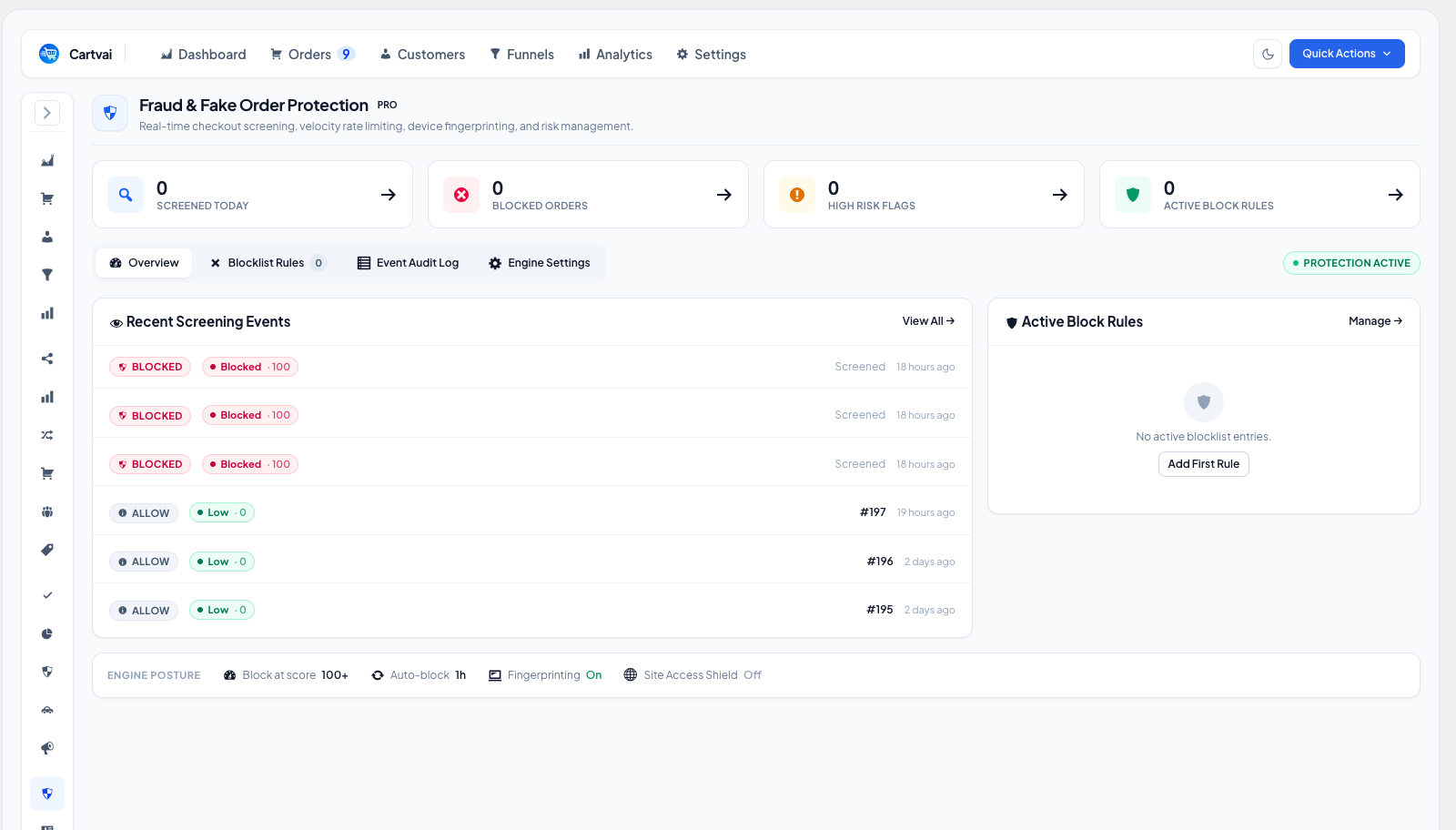
Automated fraud guard: Restricting malicious IP velocity, duplicate phone submissions, and bot attacks
3. Real-Time Phone Validation & Automated Verification (OTP)
A significant percentage of failed deliveries are caused by invalid, typo-ridden, or disconnected telephone numbers. When the last-mile courier arrives in the delivery neighborhood and cannot reach the recipient, the package is immediately marked as Unreachable and returned to sender.
Best Practices:
- Client-Side Phone Formatting: Enforce strict regex validation so customers cannot bypass the checkout with dummy numbers (like
12345678). - One-Time Password (OTP) Verification: For high-ticket items or suspicious traffic channels, trigger a 4-digit SMS or WhatsApp OTP verification before confirming the transaction.
- Automated WhatsApp / IVR Confirmation: Use automated messaging webhooks to ask buyers to confirm their order with a single tap within 30 minutes of purchase.
4. Enforce Granular Address Completeness & Landmarks
Vague address inputs represent another leading cause of failed logistics handovers. Shoppers frequently enter only a district or broad neighborhood name without providing street numbers, building details, or landmarks.
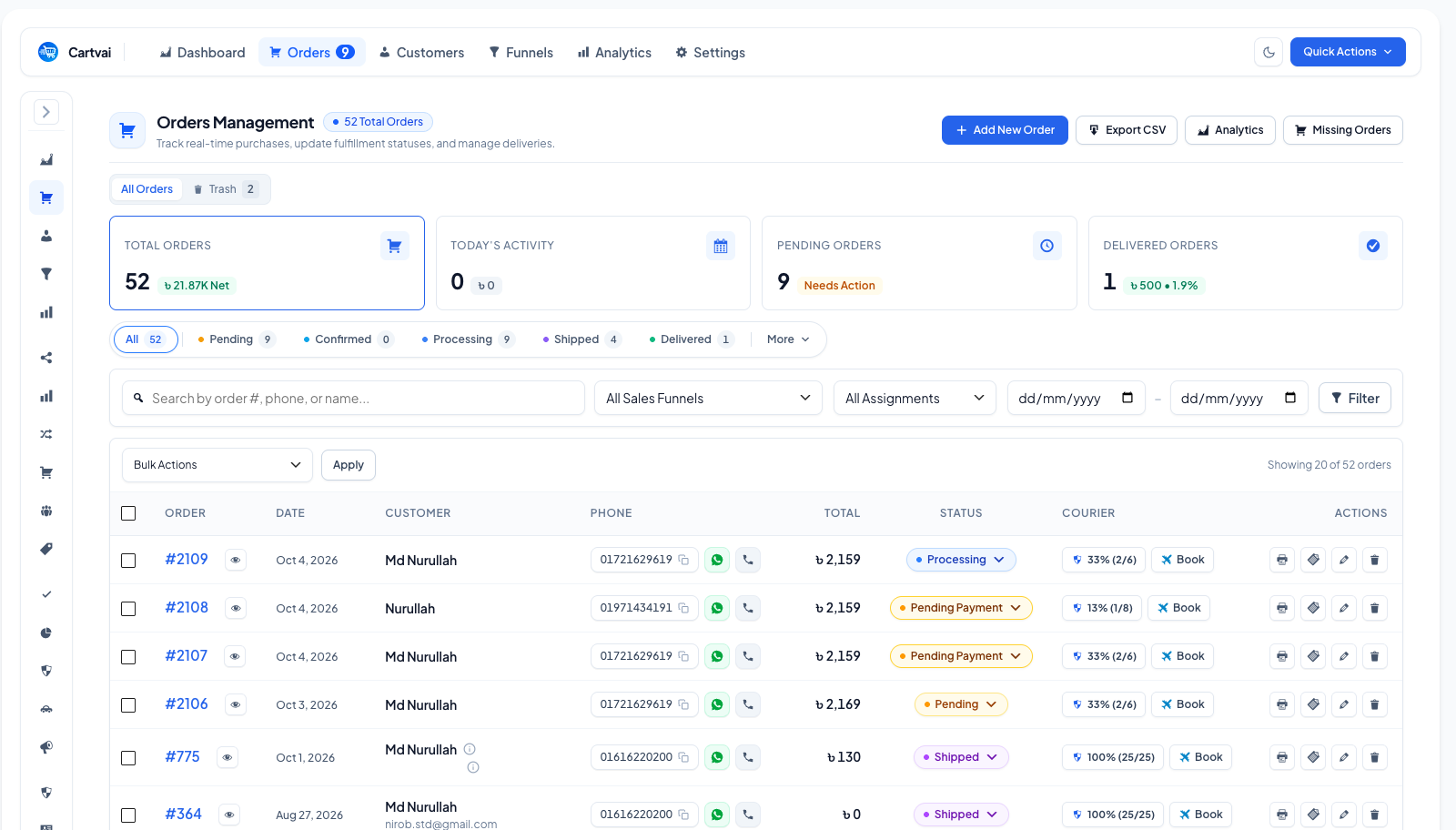
Clean, verified address payloads pushed directly into courier fulfillment pipelines for flawless delivery
How to Clean Address Payloads:
- Guide the user with intuitive field placeholders: “Apartment, Street Name, House Number, and Nearest Landmark”.
- Use dynamic cascading dropdowns for City, State, and Postal Code to prevent typos that confuse courier routing algorithms.
- A clear, unambiguous address payload ensures delivery drivers find the doorstep on the first attempt without unnecessary delivery exceptions.
5. Compress the Fulfillment Window & Dispatch Real-Time Tracking
The buyer’s excitement curve decays exponentially after an impulse purchase. In COD sales, the first 24 to 48 hours are the golden window.
If a package takes 5 to 7 days to arrive, customer remorse sets in. The buyer forgets what they ordered, spends their cash elsewhere, or purchases an alternative offline.
The Fast-Dispatch Protocol:
- Same-Day Fulfillment SLA: Aim to hand over parcels to logistics partners within 12–24 hours of order confirmation.
- Instant Tracking Updates: As soon as a tracking number is generated, dispatch an automated SMS or WhatsApp update containing the courier’s live tracking URL.
- Pre-Delivery Out-for-Delivery Alerts: Sending an automated notification on the morning of delivery (“Your parcel will arrive today between 1:00 PM and 5:00 PM, please keep cash ready”) dramatically reduces doorstep rejections.
The Financial Impact of Slashing COD Returns
Consider a growing store processing 1,000 monthly COD orders at an average order value of $25:
| Metric | Traditional Unoptimized Store (25% RTO) | Optimized Funnel (6% RTO) |
|---|---|---|
| Monthly Orders | 1,000 orders | 1,000 orders |
| Returned Parcels | 250 failed deliveries | 60 failed deliveries |
| Logistics Loss & Packaging Waste | ~$1,750 / month | ~$420 / month |
| Annual Capital Preserved | Baseline | +$15,960 directly to net profit |
By lowering return rates from 25% to 6%, the business preserves nearly $16,000 in pure cash flow annually without spending an extra dollar on marketing.
Summary
Cash on Delivery is a double-edged sword: it unlocks immense market reach, but unchecked returns can sink unit economics.
By coupling strict phone and address validation with smart upfront shipping options, rapid fulfillment dispatch, and conversion-focused architectures like CartVai, you turn pay-on-delivery into a predictable, highly profitable growth engine.
About the Author

Nurullah
Founder & WordPress E-commerce Expert
Nurullah is the founder of CartVai and specializes in WordPress e-commerce performance, checkout UX optimization, and conversion-focused sales funnels.
View all posts by this author → @cartvai